-
Koszyk jest pusty
-
x
Do bezpłatnej dostawy brakuje
-,--
Darmowa dostawa!
Suma
0,00 zł
Cena uwzględnia rabaty
Darmowa dostawa od 200 PLN

0,00 zł
0
-
Koszyk jest pusty
-
x
Do bezpłatnej dostawy brakuje
-,--
Darmowa dostawa!
Suma
0,00 zł
Cena uwzględnia rabaty
-
-
-
Koszyk jest pusty
-
x
Do bezpłatnej dostawy brakuje -,--Darmowa dostawa!Suma 0,00 złCena uwzględnia rabaty -
-
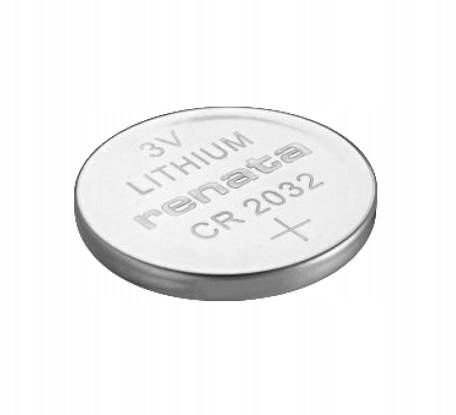
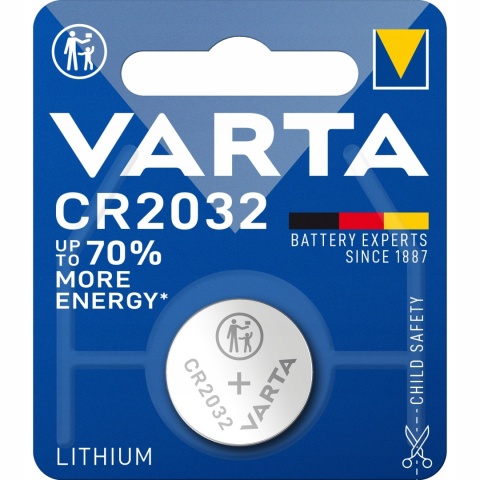
Bateria Litowa VARTA 3V CR2032/Bios/
Nowość
SKU:
S002001
5.99
Zarejestruj się, aby otrzymać za ten zakup 6 punktów lojalnościowych.
| Opinie | |
| Wysyłka w ciągu | 24 godziny |
| Cena przesyłki | 8.99 |
| Dostępność |
|
| Kod kreskowy | |
| EAN | 4008496276882 |
Zamówienie telefoniczne: 515-703-292
| Zostaw telefon |
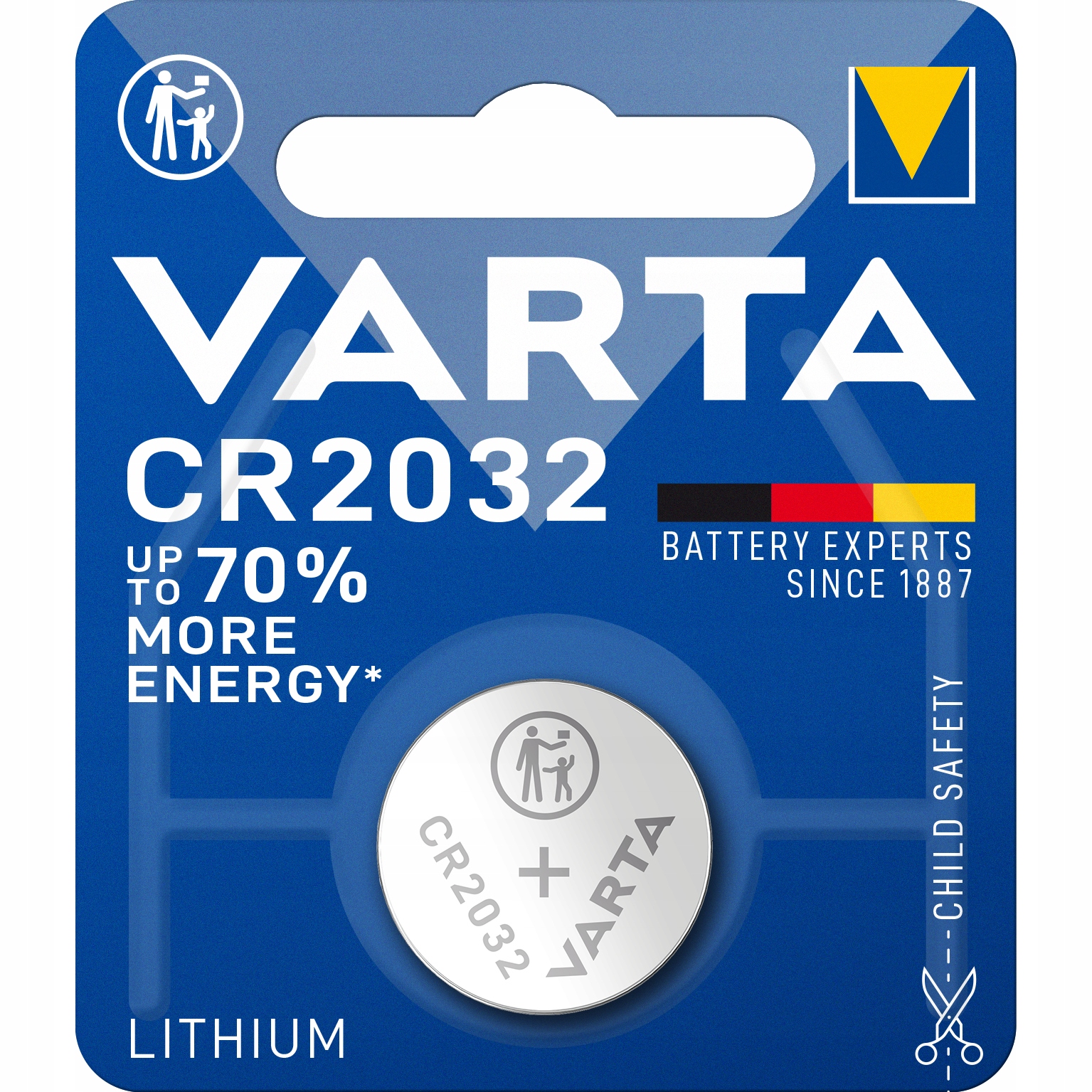
Bateria VARTA Lithium CR2032 1szt. blister Najświeższa produkcja
Bateria VARTA Lithium CR2032 1szt. blister
Wysokiej jakości pastylkowe baterie litowe VARTA zaprojektowano, by dostarczały niezawodną moc małym urządzeniom elektronicznym. Zapewniają one najwyższą wydajność w zastosowaniach impulsowych i przy stałym rozładowaniu.
- Litowe baterie guzikowe VARTA dostępne są w najpopularniejszych rozmiarach.
- Opakowania zabezpieczone przed dostępem dzieci zapewniają wysokie bezpieczeństwo
- Opatentowane, łatwe i bezpieczne wgłębienia do otwierania
- Wysoka pojemność zapewniająca dłuższy czas pracy Aż do 70 % więcej energii dla długotrwałej i niezawodnej mocy*
- Niski opór wewnętrzny i samorozładowanie VARTA - Bateryjni Eksperci od 1887 r.
- Gwarantowana wysoka wydajność i wydłużony okres przechowywania do 10 lat
*aż do70 % więcej energii dla CR2032 vs. IEC 60086-2 Ed.14.0 test klucza elektronicznego MAD. Wydajność może się różnić w zależności od zastosowania.
Szczegóły:
- Oznaczenie: IEC CR
- Typ VARTA 06032
- Średnica: 20 mm
- Wysokość: 3.2 mm
- Waga: 3 g
- System chemiczny Primary Alkaline Manganese
- Napięcie: 3 V
List of safety warnings for Specialty batteries based on the requirements of Regulation (EU) 2023/988 on General Product Safety (GPSR)
1. Risk of fire or explosion:
* Do not expose the battery to high temperatures, e.g. direct sunlight or fire, as this may cause overheating, explosion or fire. * Do not short-circuit the battery as this may lead to short circuit, overheating, leakage, explosion or fire. * Only use chargers designed for your type of battery to avoid the risk of overheating and battery damage. * Store batteries in a dry and well-ventilated place, away from flammable materials. 2. Risk of leakage:
* Avoid mechanical damage to the battery (e.g. punctures, impacts), as this can cause the leakage of chemicals. * Please check batteries regularly for leaks. If a leak is noticed, avoid contact with the substance and follow the manufacturer's instructions. * Leaking electrolyte can be corrosive. Contact with skin, eyes and mucous membranes should be avoided. In case of contact, rinse with plenty of water and consult a doctor. 3. Risk of ingestion and choking:
* Batteries and their small components (e.g. lids) pose a choking hazard, especially for children. They should be kept out of reach of children. If swallowed, consult a doctor immediately. 4. Risk of damage to the device:
* Use the battery according to the manufacturer's instructions. Incorrect use of the battery may cause damage to the device. * Replace all batteries in the device at the same time, using batteries of the same type and manufacturer. * Do not mix new and used batteries or different types of batteries. 5. Safety of use:
* Do not attempt to charge disposable batteries as this may cause leakage, overheating, explosion or fire. * Do not disassemble, crush, puncture or otherwise damage the battery. * Used batteries should be disposed of in accordance with local environmental regulations. Do not throw them in ordinary garbage cans. * Before inserting the battery, check that the contacts in the device and on the battery are clean. If necessary, they should be cleaned with a dry cloth. * Do not store the battery together with metal objects, as this may lead to a short circuit. * If you do not use the device for a long time, remove the batteries from it to prevent damage caused by possible leakage. * When replacing batteries, make sure that new batteries are inserted according to the correct polarity (+/-). * Avoid exposing the battery to shocks and drops. * In the event that the battery appears to be damaged or overheated, you should immediately stop using it and contact the manufacturer or seller.
Nie ma jeszcze komentarzy ani ocen dla tego produktu.
Sklep internetowy na oprogramowaniu
